Jozef Van Ruyssevelt
Kamerzichten
03.10.2011 - 04.12.2011
Zeedijk 635 - Knokke
Jozef Van Ruyssevelt (Basel – East Flanders, 1941 – Essen 1985) studied Painting and Graphics at the Royal Academy of Fine Arts in Antwerp.
He developed a good relationship with his teacher, the painter, graphic artist and stained glass artist Jos Hendrickx (1906-1971). Van Ruyssevelt would later succeed him as a teacher at the Antwerp Academy.
His wife May Suykerbuyk says about his time at the Academy: “His teaching caused him a lot of headaches. More because of the management than because of his students. Jozef also didn't like being around people. At the academy he preferred to eat his sandwiches alone. "
He met May Suykerbuyk in 1966. They moved to Essen, a green agricultural community on the Dutch border. It turned out to be a lucky choice because Van Ruyssevelt devoted himself to his artistry. He practiced all genres: oil paintings, pastels, gouaches, watercolours, etchings, drawings, collages and also photography. He finished his photos himself because “for him photography is an art.”
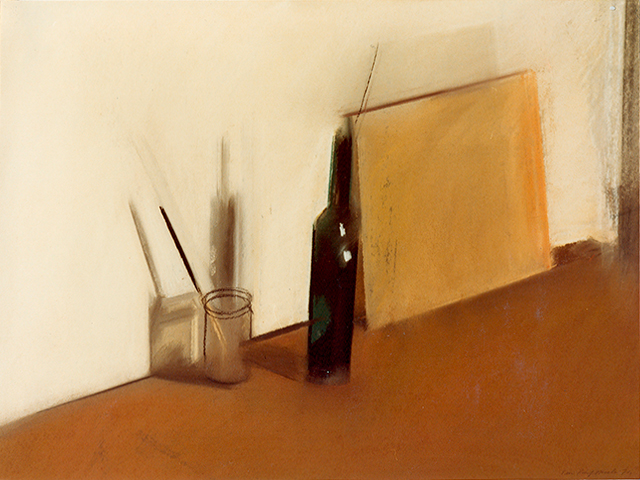
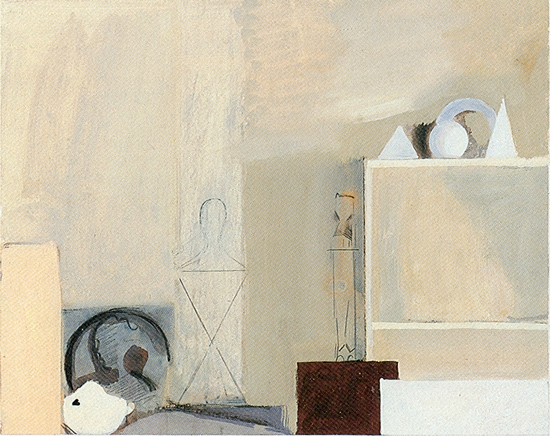
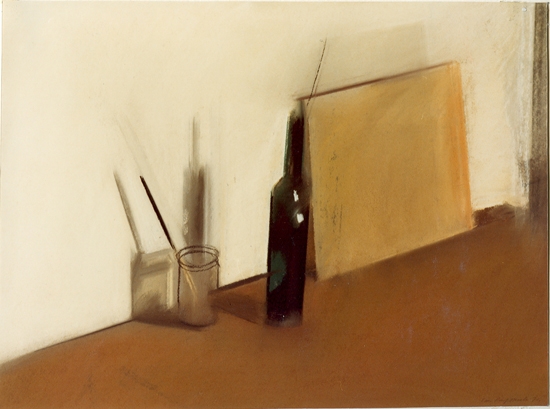
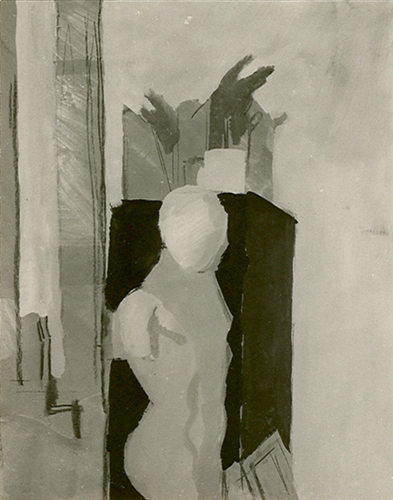
For Van Ruyssevelt, art consists of three elements: light, colour harmony and composition.
His creativity reaches its peak between 1975 and 1983. His production is also exceptionally high: more than a thousand works.
He receives exhibitions and awards at home and abroad.
His work can be found, among other places, in the Royal Museum of Fine Arts in Antwerp. Van Ruyssevelt's entire etching oeuvre and a number of paintings are included in the Print Room of the Rijksmuseum in Amsterdam.
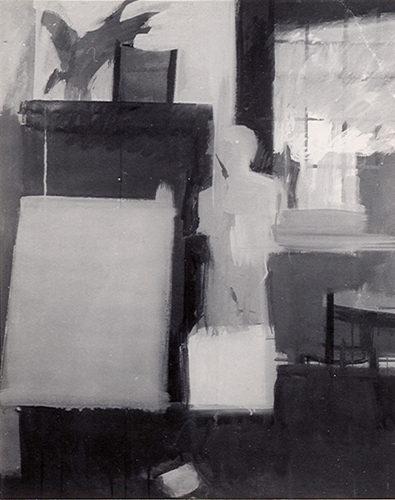
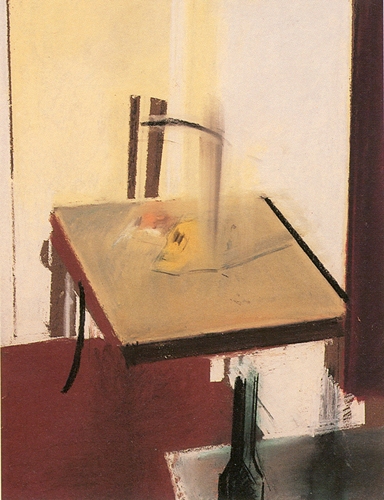
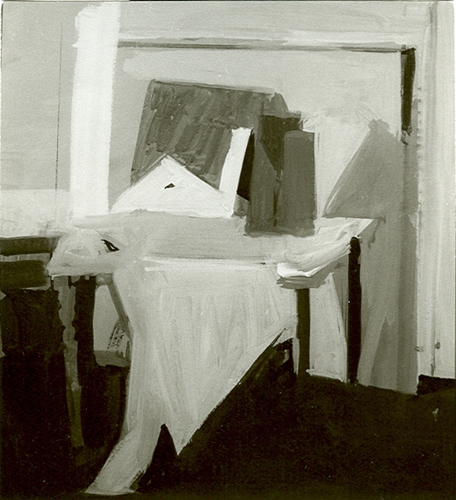
He did not look far for his subjects: the beautiful garden with its lively and dialogue-forming colours; a chair in the living room; objects on a table; the port of Antwerp …
And in collages, only form and colours counted; pure abstraction. And he exploited that colour palette to the full. It is not without reason that art journalists speak of a colour explosion, as can also be seen in Rik Wouters or Henri Matisse.
“For him, colour was the sparkling, life itself. For example, he made colour slides of an autumn leaf or he photographed glass works because of the playfulness of the light in and through the glass. I remember how we visited the cathedral of Chartres. He was astonished by the beauty of the stained glass windows and how the light danced with the colours. For him that was pure mysticism,” says May Suykerbuyk.
Originally he had a studio in the house, but eventually he worked and painted everywhere in the house, even in the kitchen where May stood at the stove: “Any light was good for him. And he painted both standing up behind an easel and bent over the table or on his knees on the floor.”
Van Ruyssevelt liked to work on different surfaces or carriers. He had enough with a torn piece of paper, so to speak.
“He thought a lot - he always wanted the best of the best - and suddenly he went to work almost nonchalantly. That nonchalance was an impression because he knew exactly what the result would be. He was very serious about his artistry.”
Sometimes he signed his work, sometimes not. There is no line to be drawn in that. When he did sign, he did so in his most elegant handwriting with heavily diluted paint.
Jozef Van Ruyssevelt seems to be a painter of joy, of vitality. However, he also had dark, very dark periods. He was manic-depressive, felt himself swinging violently between intense sadness and excessive exuberance.
Around the age of forty, he had painted three self-portraits: “You could see that he was - because of his being - a very vulnerable figure,” May Suykerbuyk concludes.
On a cold winter morning in 1985, he asked the End for an appointment.